
FLAME UniversityPune
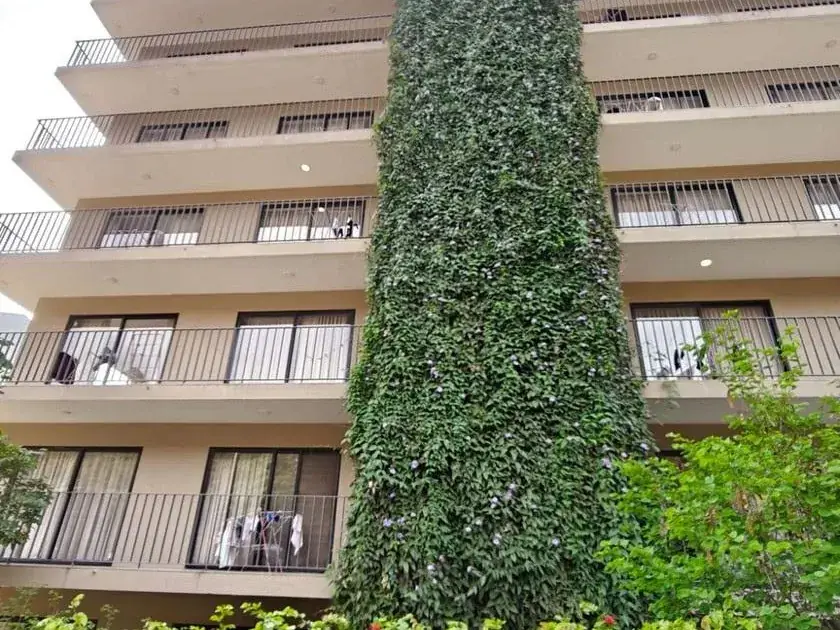
Full-height green column on a residential block
Green facades
Climbing plants on stainless cable nets, living facade panels and planter ledges for podiums, towers and boundary walls: engineered with your structural consultant, watered automatically and cared for by our own teams.
In short
A green facade grows climbing plants from planters up a stainless cable net or rope trellis held 50–200 mm in front of a building face. Vertvista designs, installs and maintains cable-net facades, modular living facades and planter ledges, with fixings anchored into the concrete frame after a structural check, AISI 316 stainless steel, automatic drip irrigation and a signed-off mock-up bay. We are building one now for Fairfield by S Raheja in Mumbai: about 1,000 m² of stainless net on an 85 m facade.
Climbers
Climbers rooted in planters grow up a stainless cable net or rope grid fixed in front of the wall. The lightest way to green a large facade; cover builds season by season.
Living panels
Pre-planted panels with built-in drip irrigation on a frame fixed to the wall. Green from day one, with more irrigation and care than climbers.
Green wallsPlanter ledges
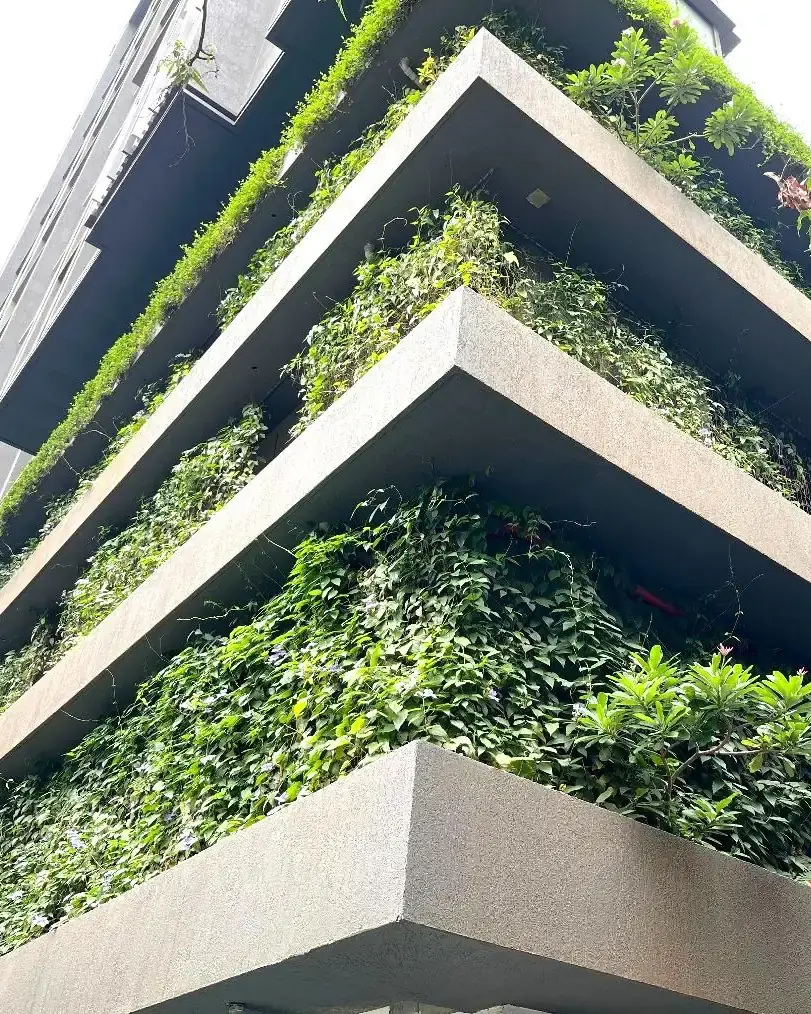
Planters built into ledges, balconies or podium edges, with trailing plants and climbers spilling over the face.
The net sits 50–200 mm off the wall, set by the facade and the plants.
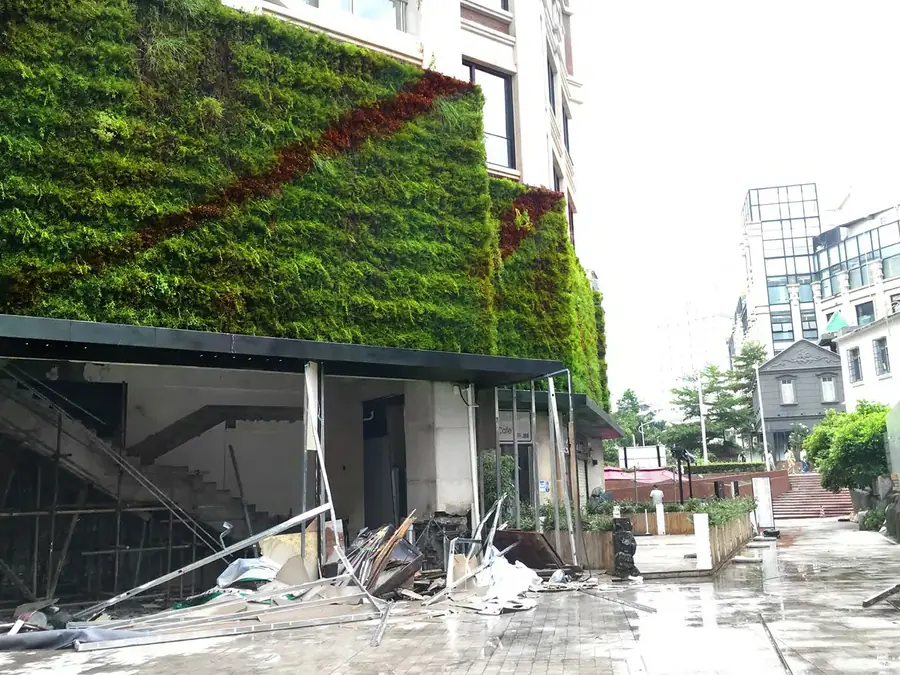
In September 2016 super typhoon Meranti hit Xiamen with gusts of around 170 km/h. The ELMICH living wall of about 220 m² on the front of JI Hotel stood firm and intact.
Its anchoring is independently certified for wind uplift up to 110 km/h. We supply the same system in India for facades that must be green from day one.
Project and photo: ELMICH, Singapore.
A stainless cable-net facade for S Raheja Realty in Mumbai: climbers planted on four podium floors will grow up a 12-metre band of stainless net, laced to a rope grid and held 50 mm off the cladding.
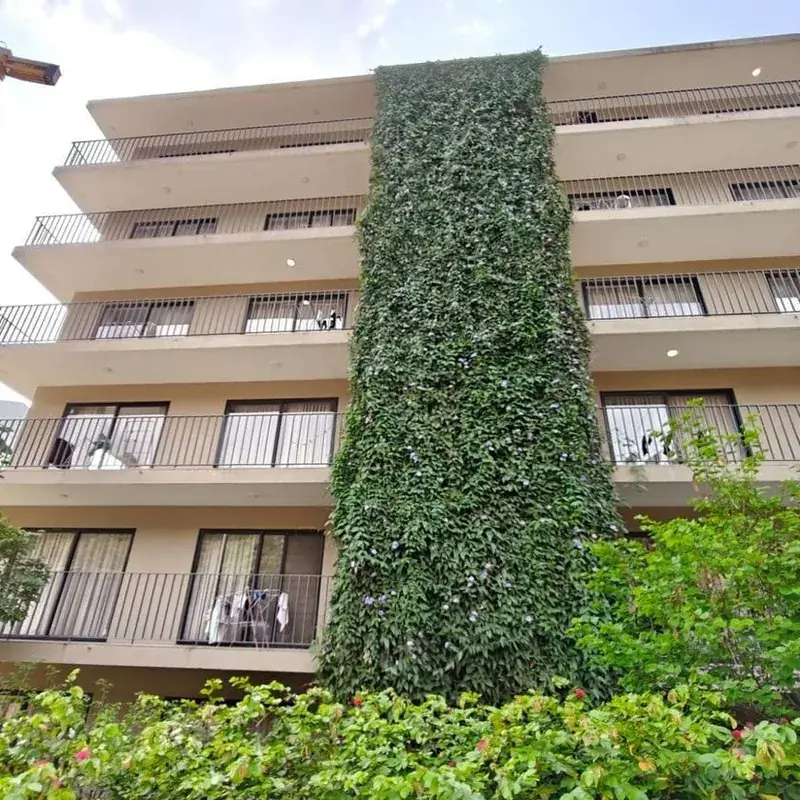 Enlarge: Flowering climbers on a green column
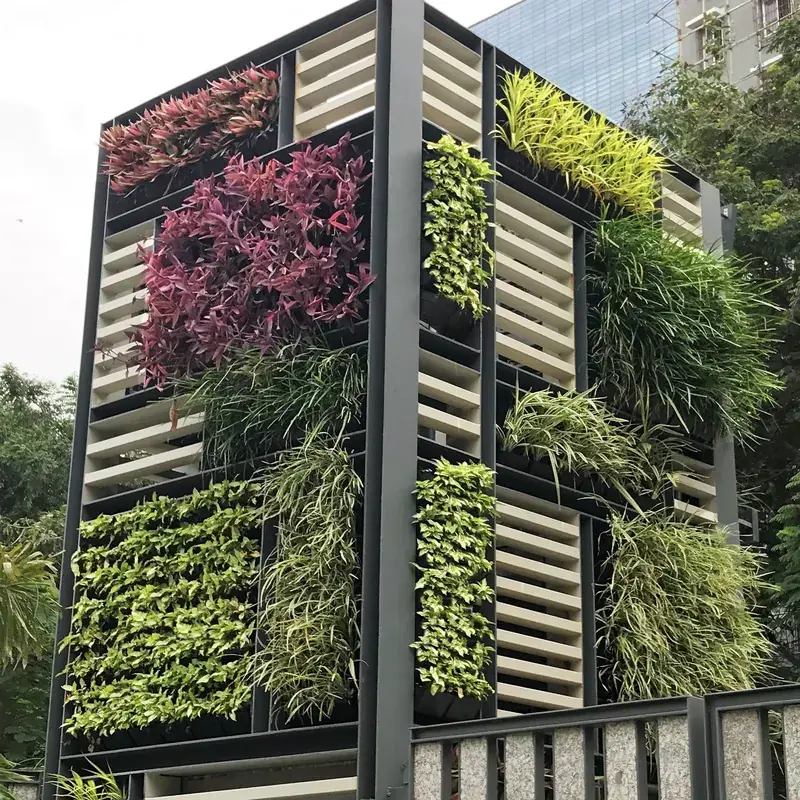 Enlarge: Modular green tower
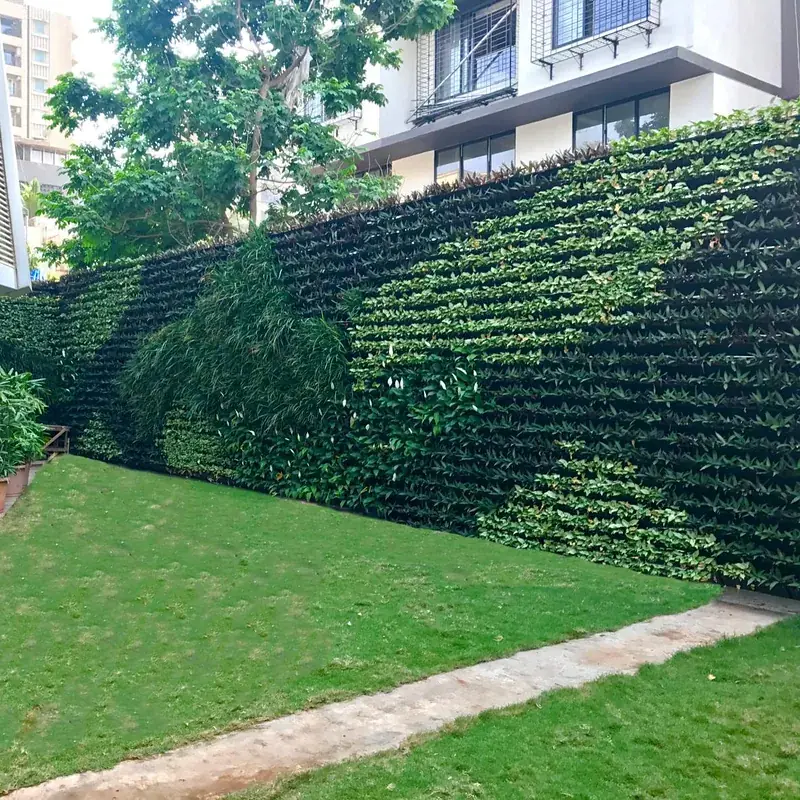 Enlarge: Living wall along a lawn
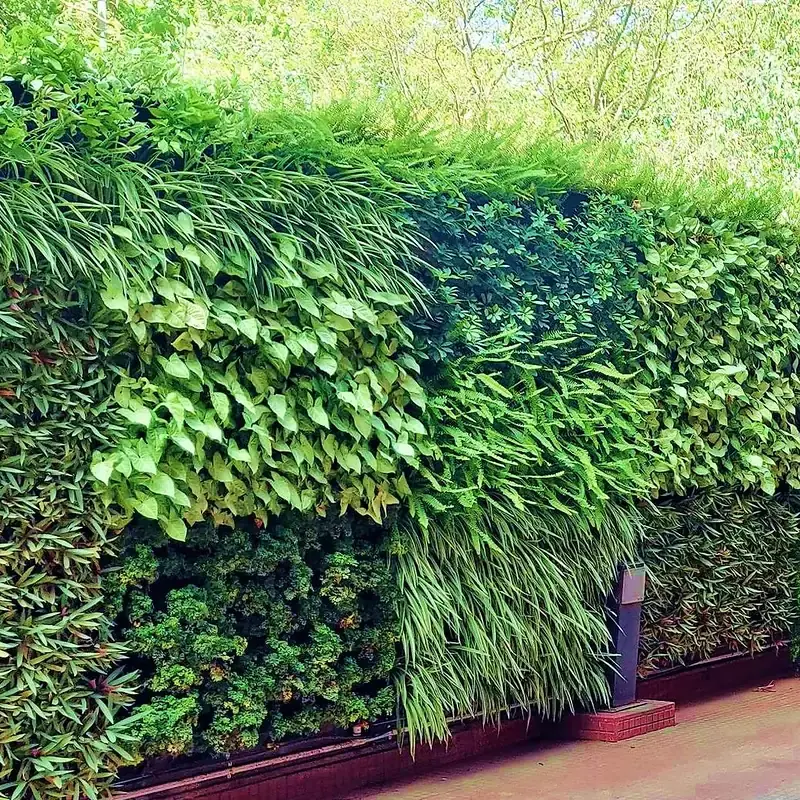 Enlarge: Street-front living wall
Full-height green column on a residential block
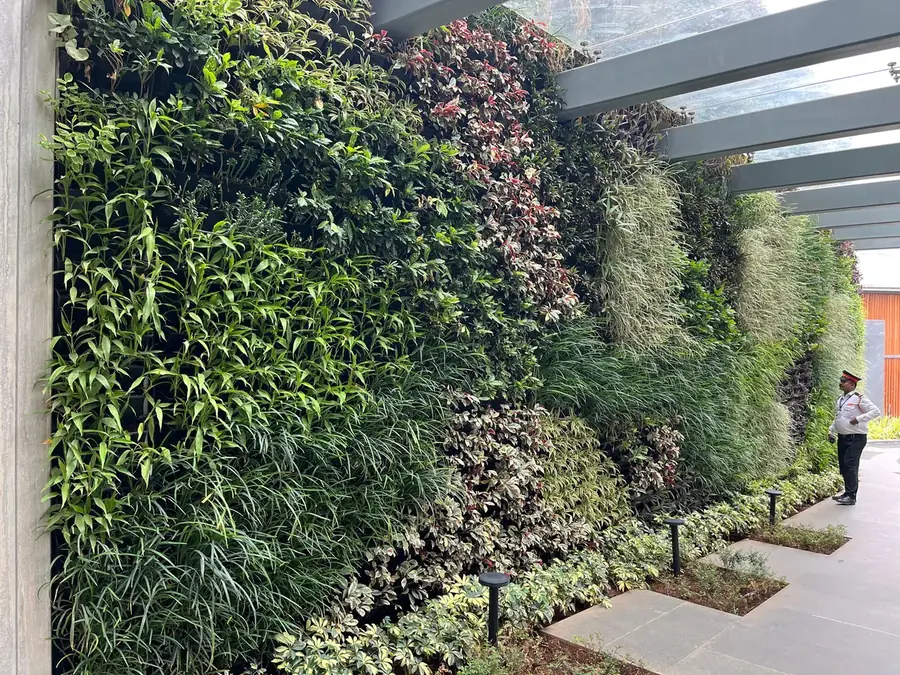
Outdoor living wall, planter-ledge facade and moss partitions

Outdoor vertical garden behind a fountain court
Our own teams install and look after this work in every city we operate in.
A green facade uses climbing plants rooted in planters or the ground, growing up a net or trellis in front of the wall. A green wall holds plants in panels on the wall itself, with irrigation built in.
Facades are lighter and more economical over large areas; living walls are green from day one.
It depends on the plant, the sun and the height, and cover builds over growing seasons. Where the facade must look green at handover, we start with pre-grown climbers or combine the net with planter ledges or living panels.
No fixing goes into the cladding: wall points are anchored into the concrete frame, cladding openings are sealed, and stainless steel is kept apart from aluminium. The climbers grow on the net, not on the wall.
Usually, yes. We survey the facade, open trial holes where there is cladding, and design the fixings around what we find, with a structural engineer's sign-off.
We choose for the city, the sun and the height: fast, evergreen climbers for cover, flowering climbers for colour. NCR facades get species proven in North Indian heat and cold.
Our teams, under an AMC: pruning, training new growth onto the net, feeding and irrigation checks. Access for this work is planned at design stage.
Share the site, the size and what you have in mind. We will come back with ideas and a time for a site visit.
Or call +91 70452 51178 or write to info@vertvista.com